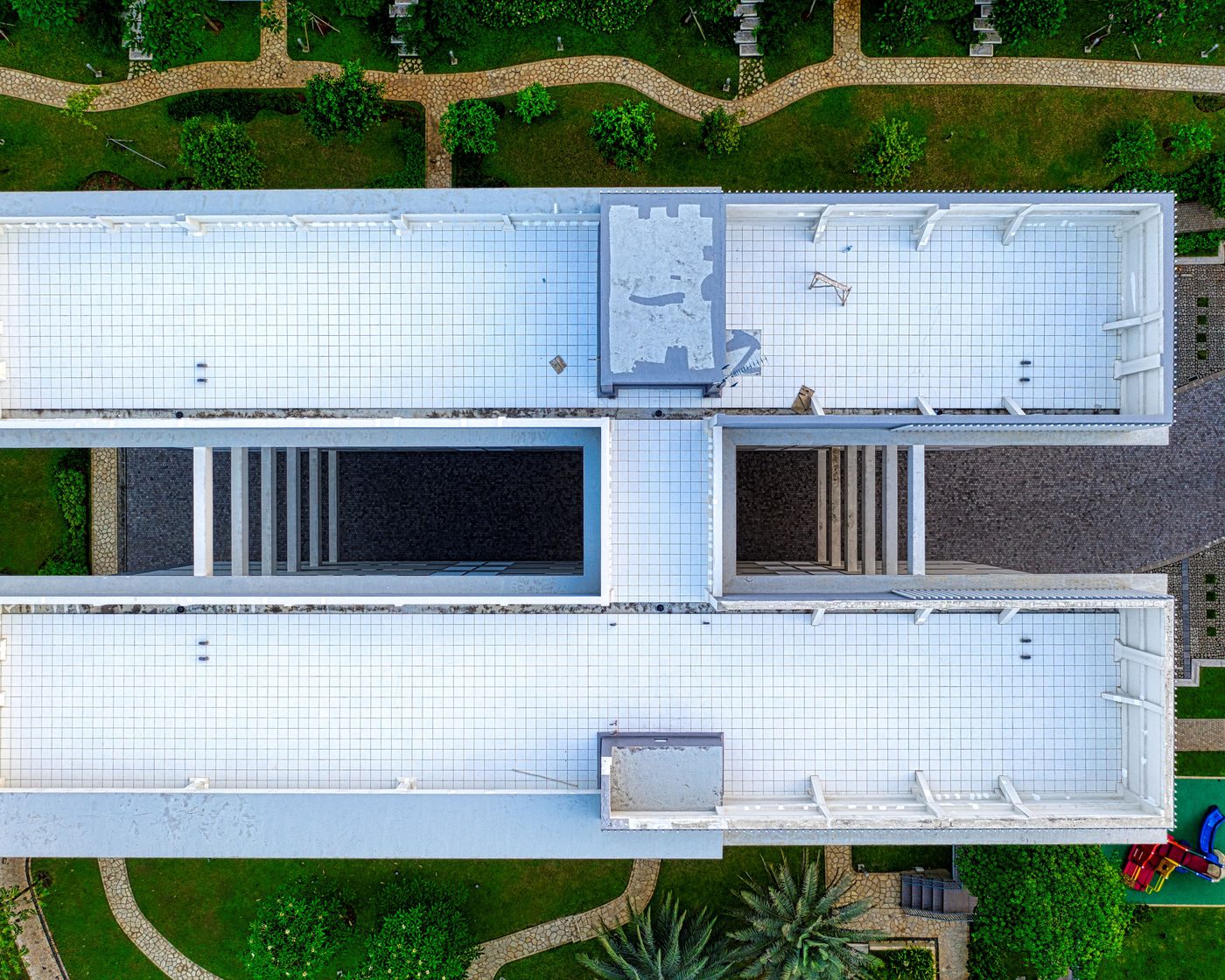
We work on commercial roofs across the Las Vegas valley and well beyond it, out to Boulder City, Laughlin, Mesquite, Pahrump and the Nevada shore of Lake Tahoe. The work is the same everywhere: repair, coatings, replacement, maintenance and the call you make when water is coming through the ceiling. What changes from place to place is the building stock, how a roof is reached, and which office issues the permit.
Search for the area your building sits in, or pick it from the map. If it is not listed, send the address anyway and we will tell you plainly whether we can get to it.
What does not change
Every roof in Southern Nevada takes the same load: intense sun, long summer heat, a large temperature swing between afternoon and night, dust carried on the wind, and a year of rain that can arrive in a handful of afternoons. Those conditions drive the same failures everywhere, which is why specification and maintenance advice barely differs across the region.
What does change
Exposure varies with where a building sits and what surrounds it. Access varies with the building type: a hatch and a fixed ladder on a warehouse is a different job from a screened equipment deck on a resort. And permitting varies by jurisdiction, which is not the same as the mailing address.
In this section
- AlianteCommercial roofing in Aliante, North Las Vegas: resort, retail and association roofs at the exposed north edge of the valley, permitted through the city.
- Boulder CityCommercial roofing in Boulder City NV: older small commercial roofs, layered assemblies, parapet details, and permits through the city building department.
- Green ValleyCommercial roofing in Green Valley, Henderson: retail centers, office and medical suites, association property, and a City of Henderson permit.
- HendersonCommercial roofing in Henderson. Distribution units, medical and office suites, retail and association property, and a city building department of its own.
- Lake TahoeCommercial roofing at Lake Tahoe NV: snow load, ice damming, ventilation and a working season that closes, on the Washoe and Douglas county shore.
- Las VegasCommercial roofing in Las Vegas. Older downtown stock, the medical district, offices and small industrial, and which building department covers the address.
- LaughlinCommercial roofing in Laughlin NV: riverfront resort and town commercial roofs, material selection for extreme heat, and permits through Clark County.
- MesquiteCommercial roofing in Mesquite NV: resort and outlying commercial roofs, visits planned as one trip, and permits through the Mesquite building department.
- North Las VegasCommercial roofing in North Las Vegas. Large low slope warehouse, distribution and manufacturing roofs, drainage, phased work and the city building department.
- PahrumpCommercial roofing in Pahrump NV: metal panel and low slope roofs on commercial, agricultural and light industrial buildings, with permits through Nye County.
- ParadiseCommercial roofing in Paradise NV: resort, casino and convention roofs, phased around occupied buildings, night lift windows and Clark County permits.
- Spring ValleyCommercial roofing in Spring Valley NV: retail centers, offices, self storage and multifamily roofs, with permits through the Clark County building department.
- SummerlinCommercial roofing in Summerlin. HOA and multifamily property, offices, medical suites and retail centers, in a community split across two building departments.
Common questions
Do roofing permits differ between Las Vegas, Henderson and Clark County?
Yes. Southern Nevada is not one jurisdiction, and which office issues the permit depends on the address rather than the mailing city.
- Las Vegas, North Las Vegas, Henderson, Boulder City and Mesquite each run a building department
- Much of the valley, including the Strip, sits in unincorporated Clark County
- A building with a Las Vegas postal address can still be under county jurisdiction
- The application goes elsewhere, a different office schedules inspections, and requirements differ
Ask before work starts who applies for the permit and whether the cost is in the price, and what inspections the job needs, because a replacement usually needs the deck seen before the new system covers it. Keep the permit and the final sign off with your roof records.
Will you travel outside the Las Vegas valley for commercial work?
Often, yes. We work across Southern Nevada, including Boulder City and Mesquite, and we look at properties further out case by case.
- Distance affects scheduling and mobilization rather than whether the work can be done
- Send us the address and we will answer before anyone drives out
- Getting a crew, materials and equipment to a roof barely changes with job size
- So a small repair a long way out carries a much higher share of that cost
- Batching work is the answer: one visit covering several buildings costs far less each
The same logic applies to maintenance visits and to combining a repair with a scheduled inspection. Tell us the whole picture when you get in touch, including buildings you were planning to deal with later, and we will plan the visit around it.
What should I have ready before a commercial site visit?
Roof access details, a contact who can open the building, and whatever history you have. None of it is essential, but each piece shortens the visit and sharpens the answer.
- Previous roof reports, repair invoices and any manufacturer warranty paperwork
- A note of where leaks have appeared inside the building
- History separates a one off fault from a pattern in the same corner
- Warranty cover means an authorized contractor and approved materials, so tell us first
- Safe access, usually a hatch or fixed ladder, and someone to unlock it
Give us notice if tenant space has to be entered, and let tenants know we will be over their rooftop equipment. If you have interior stains, leave them uncovered so we can photograph them and work back from the evidence.
Do roofs in Mesquite and Boulder City face the same conditions as the valley?
Broadly yes, with local differences. The whole region shares intense sun, high summer heat, large daily temperature swings and a concentrated monsoon season.
- Those stresses drive the same failures, so specification advice changes little
- Wind exposure is the clearest difference, on an open edge of a community
- Exposed sites take more load on edge metal, coping and anything loose
- Elevation and terrain shift how far a roof cools overnight, and so the daily movement
- Open desert or a construction zone nearby puts far more grit in the drainage paths
The consequence is not a different roof system but a different inspection emphasis. Exposed sites need attachment checked hard, dusty sites need drains and reflective surfaces cleaned more often, and everywhere needs the same work finished before the middle of June.
Can you work on several buildings across different cities at once?
Yes, and it is usually cheaper than handling them separately. One survey covers every building, produces one consistent report, and lets you rank roofs by condition rather than by whichever complained loudest.
- Different cities take planning around permits and access, not a contractor each
- One team, one standard and one set of weeks makes the urgency ratings comparable
- The budget conversation becomes a ranking exercise instead of an argument
- Useful for boards and managers who have to justify which building goes first
- Tell us how many buildings and where, so access and permits run in a sensible order
Expect the report to flag anything actively leaking for immediate attention, anything with wet insulation next because it worsens with every storm, and the rest with a year to revisit. Keep each year's report, because the trend tells you more than any single survey.