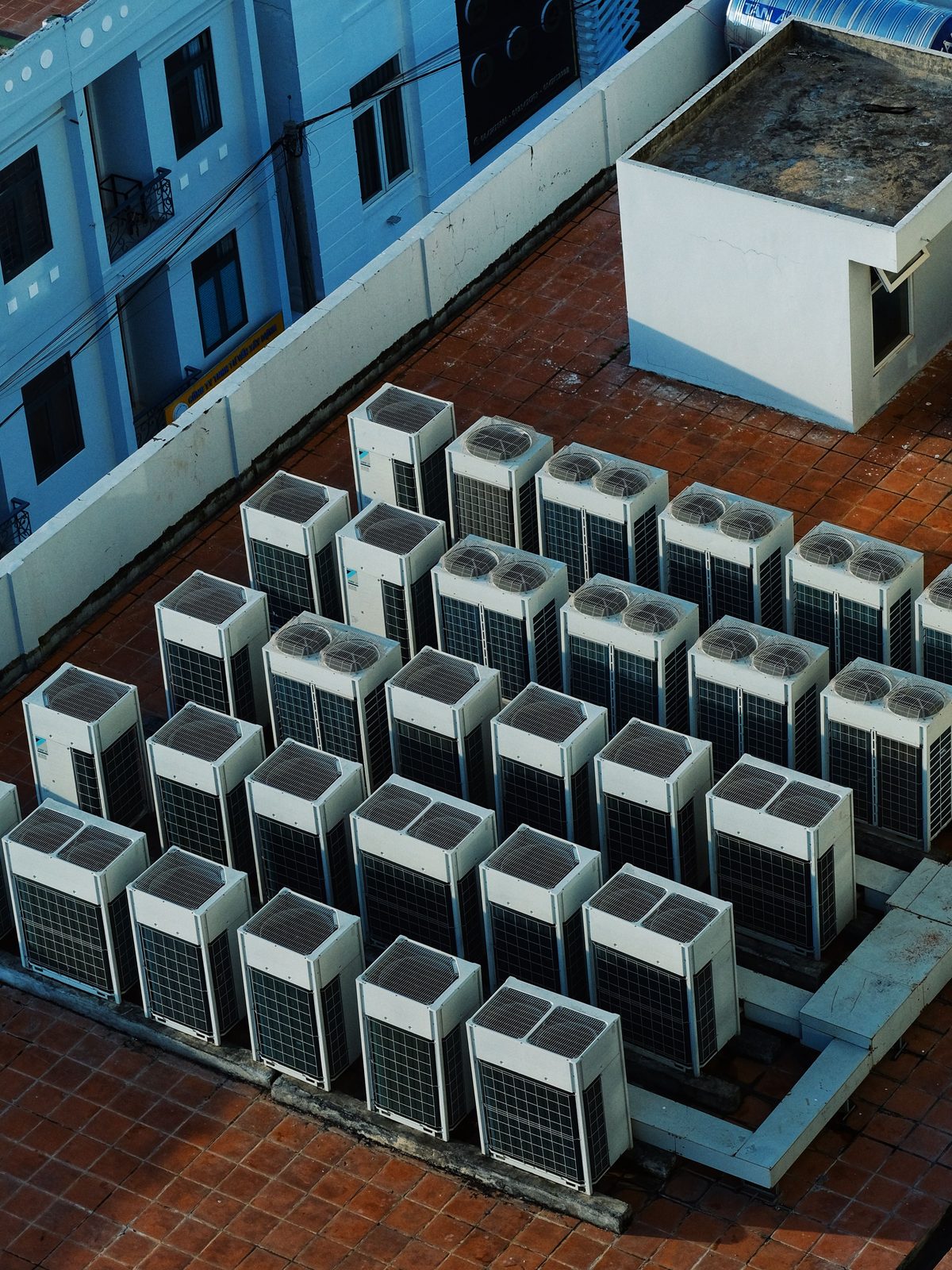
Why a dry climate needs more maintenance, not less
Owners here reasonably assume a roof that rarely sees rain needs less attention. The opposite is true, and the reason is that the damage happens between storms.
Sun and heat work on the roof every day of the year, hardening sealant and fatiguing the joints that take the daily expansion and contraction. Dust settles into every lap, drain and scupper over months of dry weather. None of that announces itself. There is no drip to tell you a boot has split or that the outlet is half full of grit, because there has been no water to reveal it.
Then the storm arrives, and everything that quietly failed since the last one is tested in the same hour. Roofs here do not fail in the storm that was forecast. They fail in the storm that arrives on a roof nobody cleared.
What a program is really buying
Predictability, mostly. Scheduled work turns an unknown liability into a line item, and it moves spending from emergency rates to planned rates. Emergency work is always the most expensive version of the same repair, and it arrives at the worst moment for whoever has to approve it.
For boards and owners with several buildings it does something more useful than that. It produces a ranked queue based on condition, so the budget goes to the roof that is actually closest to failing rather than to the oldest one or the one whose tenant complains loudest. Over a few years the record also gives you a defensible forecast, which is what makes a reserve plan or a capital request survive contact with a committee.
What it does not cover
A program is not insurance, and it does not stop a roof reaching the end of its life. What it does is make that ending visible early enough to plan for, instead of discovering it during a storm.
It also does not cover the backlog a neglected roof brings with it, or damage caused by other trades working up there. The second of those is worth a rule rather than a repair: most of the damage we find on retail and resort roofs was done by somebody servicing equipment, and it stays invisible until the first serious rain. A program catches it. A rule about who goes on the roof, and who tells you, stops it.
Common questions
What does a maintenance visit include that an inspection does not?
An inspection looks and reports. A maintenance visit looks, reports and fixes, which is the whole point of paying for one.
- An inspector notes a choked drain and hardened sealant at the pipe boots
- A crew clears the drain, fits the missing strainer and reseals the boots
- Then writes down that they did it, which is the record you keep
- Grit collects continuously here and storms arrive with no useful warning
- A report saying clear the drains, filed in spring and acted on in August, did nothing
A maintenance visit also has a boundary, and it should be written down. Minor work happens on the day up to an agreed value. Anything larger stops, gets photographed and quoted, and waits for your approval, so nobody is surprised by an invoice.
Are repairs included in the program, or billed separately?
It depends how you want it set up, and both ways are legitimate as long as the boundary is explicit.
- Routine work included in the visit rate, small repairs on the day at an agreed rate
- Anything above a set value photographed, quoted and held for approval
- That keeps the program predictable and stops small items waiting for a purchase order
- A roof coming in after years of neglect carries a backlog, which is a repair project
- We price the backlog separately and recommend clearing it in one go
A program spent nibbling at an existing backlog never gets ahead of it. Whatever the structure, ask for the rate card in writing: a labor rate, a call out basis, any materials mark up and the approval ceiling. Those are easy to agree before the work and awkward to agree afterward.
Can one program cover several buildings with different roofs?
Yes, and most of the portfolios we look after here are exactly that: single ply, modified bitumen, tile and foam, on buildings finished years apart and often across more than one city.
- What changes between them is the work on each roof, not the program structure
- Visits are scheduled together to keep mobilization sensible
- Each roof still gets its own record
- Avoid treating the portfolio as one asset with one age
- Orientation, shading, equipment and past repairs put same year buildings years apart
Rank them by what the survey found rather than the date on the certificate. Where buildings sit in different jurisdictions the permit authority follows the address, so a program spanning the city, Henderson and unincorporated county may deal with three building departments once work goes beyond maintenance.
What records do we get, and why do they matter later?
After every visit: dated photographs tied to locations on a roof plan, the condition of each section, what was done, and what was found but not done with a recommendation.
- It settles arguments about money, because dated photographs beat an opinion
- A board facing an assessment can see the same roof getting worse
- It supports claims, since warranties commonly require inspection and evidence
- Storm damage is easier to argue when the condition beforehand is documented
- It makes the next decision cheaper, because a surveyor starts with a history
Keep the records somewhere that survives staff turnover. The most common reason a building has no roof history is not that nobody inspected it. It is that the reports lived in one person's inbox.
Can you maintain a roof another company installed?
Yes, and most roofs in a program were installed by somebody else. What we ask for at the start is whatever paperwork exists: the system, the products, the details and any warranty documents.
- A single ply repair has to be in compatible material to weld or bond at all
- Warranties generally set out who may work on the roof and what must be reported
- Find the warranty before the first visit rather than after the first repair
- If it expired or was never registered, the question disappears
- We do not spend visits on what the last contractor should have done
The useful output is a record of the roof as it stands today and a plan for keeping it going, which is what you are paying for. Where we think the original work is causing a recurring problem, we will say so plainly and show you why.