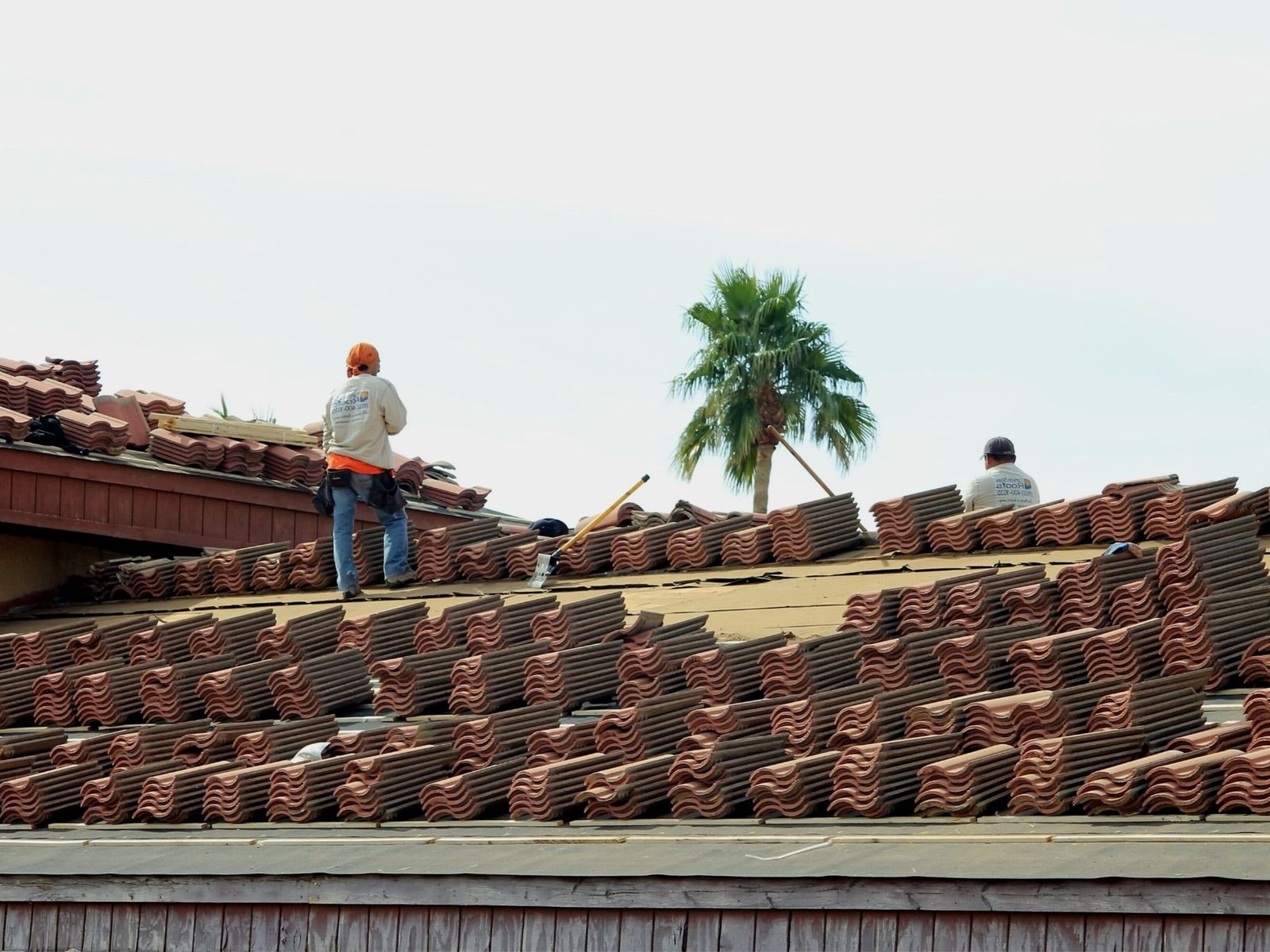
Older buildings that have been roofed more than once
The commercial stock in Boulder City is smaller and older than most of what we work on in the valley. Storefronts and small offices, lodging, light industrial units, and a good deal of property that has changed use since it was built.
What that means on the roof is layers. A small building that has been covered over twice carries a history nobody wrote down: a gravel surfaced built up roof under a later membrane, insulation of unknown age, and a deck that may be wood plank, lightweight concrete or metal. Masonry parapets are common, which puts the weak point at the through wall detail and the coping rather than in the field. Evaporative coolers, water lines and small equipment stands sit on many of these roofs, and they are frequently older than the surface they stand on.
Size changes the arithmetic as well. On a warehouse the open field is nearly all of the roof. On a building this size the perimeter, the parapet and the penetrations are most of it, so almost all of the risk and most of the labor sit in details made by hand.
What we look at first
The deck, by inference and then by opening it. A test cut in a few agreed places tells us how many layers there are, whether the boards underneath are wet and what is carrying the load. On a building with no records that single exercise decides whether the honest recommendation is a repair, a coating or a replacement, and it is worth doing before anyone writes a specification.
Then the perimeter. Parapets on older masonry move, coping joints open, and the through wall flashing buried in the wall may be original and may no longer be doing anything. Water that gets behind a parapet runs down inside the wall and appears on a ceiling a long way from the roof, which is how these buildings produce leaks that look nothing like roof leaks.
Then drainage, which on this stock usually means scuppers through a parapet rather than internal drains. A scupper narrowed by grit and a bird nest is the whole drainage capacity of the roof in one opening, and there is often no overflow provision at all.
Then the equipment, starting with anything that discharges water onto the membrane.
A short drive, a quiet street and the city
Access here is usually straightforward. Buildings are low, roofs are reached from a rear lot or an alley by ladder or hatch, and a lift can normally stand close to the building without shutting anything down.
The scheduling constraint is the tenant rather than the structure. A single business occupying the whole building cannot move out for the week, and the noise of a tear off over a small office or a shop is directly overhead rather than a floor away. So the sequence is planned around opening hours, and the ground question is where the debris container stands on a narrow street and for how long, which is agreed with the property and the city rather than assumed.
Permits go through Boulder City, not Clark County. The city runs its own building department and its own ordinances, several of them unusual for the region, so anything that changes the appearance of the building, such as a screen, a parapet finish or a sign structure, is worth a conversation with the city before it is specified rather than after it is installed.
Common questions
How do we find out what is already on an older Boulder City roof?
By opening it in a few places, because on a building of this age nothing else gives a reliable answer. Records are usually missing or describe a roof since covered over twice.
- A test cut shows the number of layers and what each one is
- It shows whether the insulation is wet and what the deck is made of
- Here that can be wood plank, lightweight concrete or metal
- The deck matters most and is the one nobody can see
- A damp wood deck at a parapet is a different job from a sound metal one
That is why a replacement on an older building is quoted with rates for deck repair and wet insulation rather than a lump sum, and why we photograph everything before it is covered. Cuts are made with your agreement, in chosen places, and closed properly in matching material the same day.
Our building has an evaporative cooler on the roof. Does that cause problems?
It is one of the more reliable leak sources on older commercial buildings here, for a simple reason: it is the only thing on the roof that is supposed to put water there.
- It sits on a curb or stand, is fed by a water line, and vibrates
- Each of those is a hole, a wet area, or a detail being worked loose
- The equipment is often older than the roof surface around it
- Water bled onto the field keeps one area wet until the surface splits
- Platform legs set straight on the membrane abrade it
We check where the discharge actually goes first. The fixes are ordinary: run it to a drain or scupper, put the equipment on properly flashed supports, and keep a walkway pad on the route the technician uses, since this unit gets visited far more often than the rest of the roof.
Can a new roof go over the old one on an older building here?
Sometimes, and it is a question for the city building department rather than a matter of preference. Boulder City runs its own, so ask what applies to your address before a bid is written around the answer.
- Codes limit how many coverings a building may carry
- A building covered over more than once is usually a tear off regardless
- Whether the insulation under the existing surface is dry
- Whether the deck can carry the added weight, a real question on older construction
- Whether the existing surface is stable enough to bond or fasten to
Even where a recover is permitted it gives something up. A tear off is the only chance to see the deck, correct the fall with tapered insulation and rebuild the parapet details. On a small roof that cost difference is smaller than owners expect, and the decision does not come round again for decades.
Does Boulder City issue its own roofing permits?
Yes. Boulder City is an incorporated city with its own building department and its own ordinances, several of them unusual for the region, so permits go through the city rather than Clark County.
- That is the opposite of much of the valley, which is unincorporated county
- Submission requirements, fees and the inspection queue are the city's own
- A contractor who works mostly in the county cannot apply the usual process
- Ask early which inspections your scope needs and how they are booked
- On a replacement, a deck inspection decides how much roof opens at a time
Because the city writes its own ordinances, ask about anything visible or anything that changes the outside of the building: an equipment screen, a parapet finish, a new roof level or a sign structure. Put those to the city before the detail is specified rather than after it is installed.