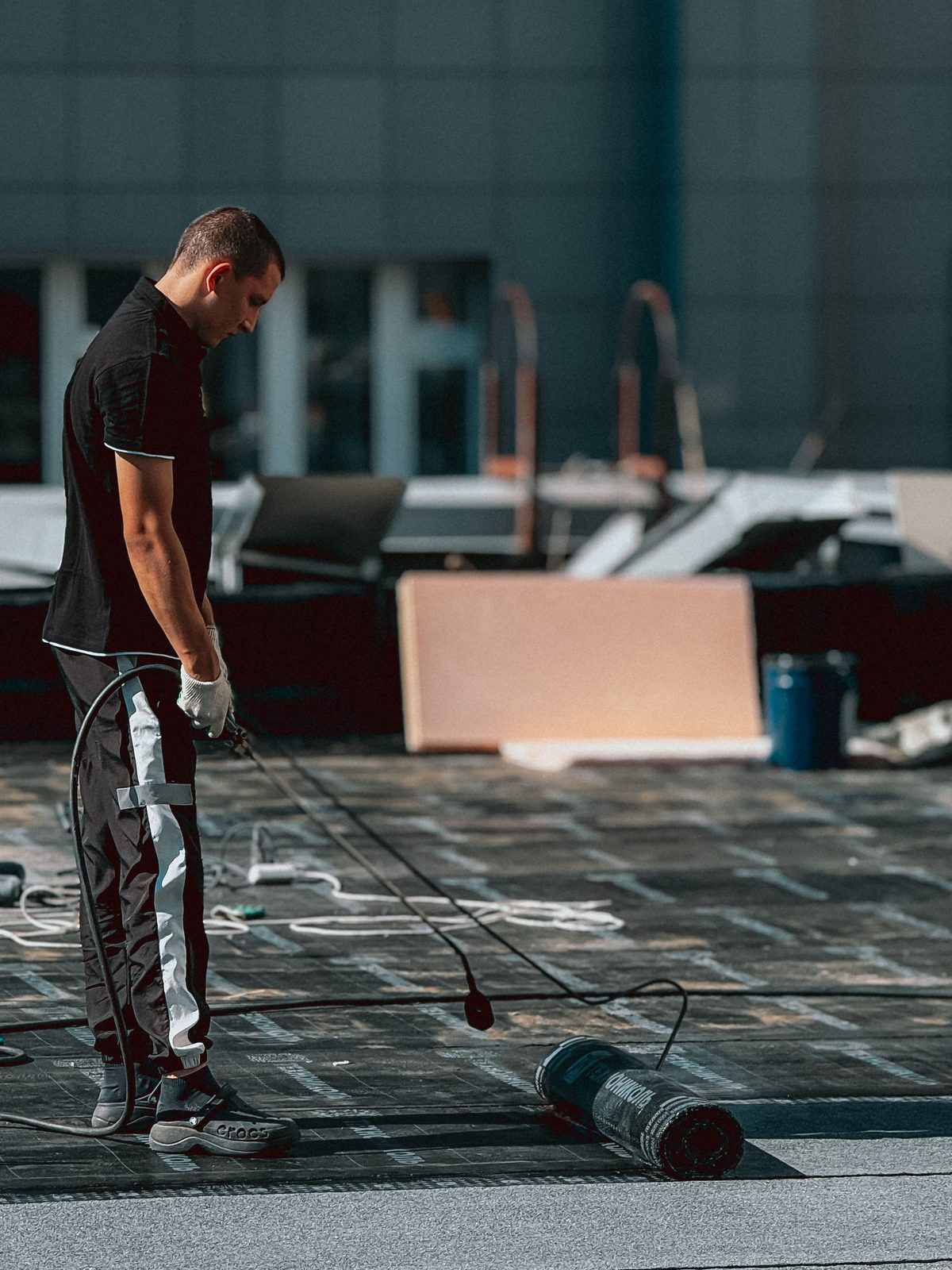
Where valley roofs let go first
In a mild climate a roof wears out in the field. Here it fatigues at the joints. Everything on the roof expands through the day and contracts overnight, and the places that absorb that movement are the seams, the laps, the flashings at parapets and curbs, and the sealant around every penetration. Ultraviolet light works on the same places from above, hardening exactly the materials that were supposed to stay flexible.
So the repairs we do most often are not patches in the middle of a roof. They are pipe boots that have gone rigid and split at the base, counterflashings that have pulled away from a parapet, curb flashings under rooftop units that vibrate all summer, and drain bowls where the clamping ring has loosened and the membrane has crept back.
There is a pattern worth knowing about. Details installed on the same day reach the end of their working life at roughly the same time, which is why a roof that has been quiet for years can open in three places in one monsoon season. When we find one failed detail, we look at all the others of the same age before quoting, because fixing them one storm at a time costs more than doing them together.
What happens before we seal anything
Two checks come before the repair. The first is whether the insulation under the opening is wet, because sealing a dry surface over saturated boards produces a repair that holds for a season and fails from below with the damage now invisible. The second is whether the outlets can clear water, since a repair sitting next to a drain full of grit will be under standing water the next time a storm arrives.
Neither check adds much to a visit. Both decide whether the repair is worth doing at all.
When to call, and when it can wait
Call now if water is entering an occupied space, if anything on the roof has lifted or come loose, or if the roof is holding water because the drains have backed up. Those get an unscheduled visit.
A stain that has stopped growing, a blister in the field, or a lifted lap found on an inspection does not need an emergency. It needs a booked repair before the next monsoon, which is the point at which every deferred detail on every roof in the valley gets tested at the same time. The cheapest work we do is the repair somebody scheduled in April.
Common questions
Why does the leak appear in a different part of the building?
Because water does not fall straight through. It gets through the membrane at one point, lands on the insulation or the deck, and then runs until it finds a gap.
- Deck flutes, insulation joints and the slope of the structure all steer it
- It can surface at a deck seam, a conduit or a light fitting far off
- So we do not patch above the ceiling stain, which only seals sound membrane
- On a valley roof the entry point is nearly always a detail, not the open field
- We start at the nearest curbs, pipes, drains and parapets and work outward
Tracing it properly takes a dry roof, a look at how the deck runs, and sometimes a cut into the assembly. Wet insulation is the most reliable trail there is, because the saturated area points back toward the source even when the surface gives nothing away.
Can a roof be repaired in the middle of a valley summer?
Yes, and a great deal of repair work here happens in exactly those months, but the surface temperature changes how and when.
- A dark membrane in full afternoon sun runs far hotter than the air
- Some adhesives flash off before they grab and some sealants slump
- Walking the roof at that temperature marks it
- Our crews start early and move to shade or detail work by midday
- Roof work in full sun here is a safety limit as well as a materials one
What you should not do is delay an active leak until autumn, because water inside a building does damage every day it continues. We can stabilize it now and schedule the permanent repair for conditions that suit the materials, and we will tell you which parts can be done today.
What does the dust do to a repair?
It gets in the way of adhesion, which is the whole basis of a roof repair. A membrane that looks clean carries a film of dust that stops an adhesive bonding and contaminates a heat weld.
- Fine grit settles continuously and blows into every lap and corner
- Surface preparation matters more here than a national method statement suggests
- A proper repair cleans back to sound material before anything is applied
- It matters even more on coatings, where the bond covers a large area
- Grit also collects in drain bowls, behind strainers and in scuppers
We would rather spend the extra time preparing than come back to a patch that lifted at the edge. The drainage problem is the same story: months of dry weather fill the outlets, then the first storm arrives and the roof cannot clear the water. Clearing them is part of the repair.
Is it worth repairing a roof that is already near the end of its life?
Sometimes, and the answer turns on what the rest of the roof is doing rather than on the age.
- Field intact and only the details gone: repair is good value and buys seasons
- Rebuilding flashings and boots is a fraction of a replacement
- Membrane brittle, chalked, shrinking or splitting in several places: repairs stop working
- Every patch pulls on material with no flexibility left, and the next failure follows
- A surface gone hard, with coating that rubs off on your hand, has been consumed
Valley roofs age at the joints first because of daily thermal movement, so tired details over a sound field are normal and repairable. Keep track of what you spend. When annual repairs look like a meaningful share of a replacement and the trend is upward, they are funding a replacement in installments without delivering one.
Do you have to cut the roof open to find the leak?
Not always, but often it is the fastest and cheapest way to get a real answer, and we always ask before doing it.
- A small cut shows whether the boards underneath are wet and how far it extends
- It also shows what the assembly consists of, which decides the repair materials
- On a large warehouse roof a moisture survey narrows the search before anyone cuts
- Infrared works on the difference between wet and dry, so we scan after a hot day
- The cuts then confirm the map at a few points rather than hunting blind
Every cut is closed properly the same day, in matching material, as part of the work. If a contractor opens a roof and leaves it patched with tape until a later visit, that is not investigation, that is a second leak waiting for the next storm.