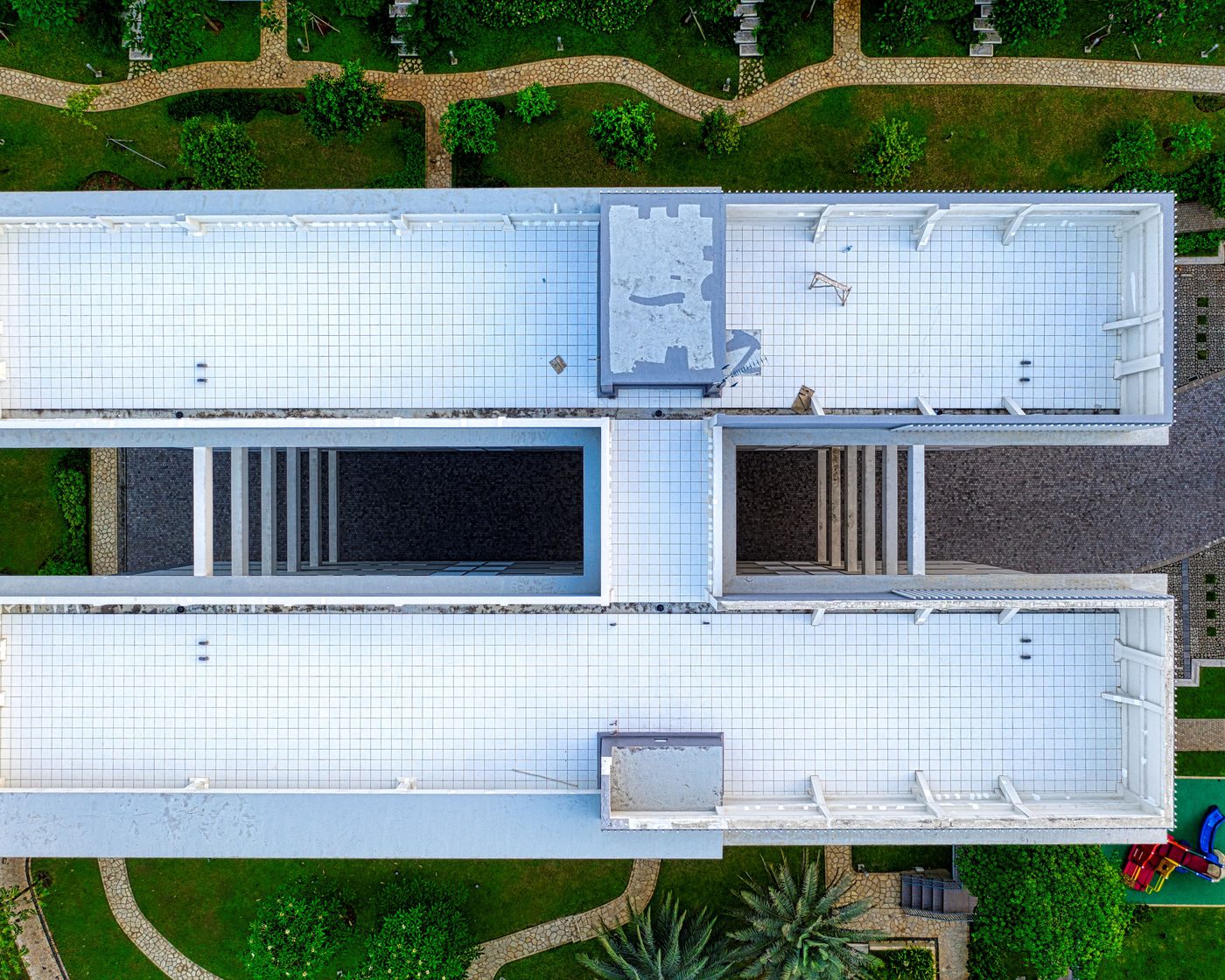
Commercial roofs in the Las Vegas valley are aged by heat, ultraviolet light and daily movement, then tested by a short and violent storm season. Three stresses arrive together, and they change how roofs fail here: not by slowly wearing through in the open field, but by fatiguing at the joints until a storm finds the opening.
That distinction matters because it tells you where to spend money. A roof specified from a national catalog is priced for a climate that ages it gently and reports its own faults early. Here the aging is faster, the faults stay silent for months, and the bill arrives all at once on an afternoon in July.
Heat
A dark roof surface in full summer sun runs far hotter than the air around it. That temperature does two things. It accelerates the chemical reactions that make membranes, sealants and adhesives brittle, and it drives the daily expansion and contraction of every layer in the assembly.
The heat also reaches inside. A hot roof pushes heat into the space below and into ductwork running across it, which shows up as cooling cost and as equipment working harder than it was sized to. This is why surface color and reflectivity are engineering decisions in the valley rather than aesthetic ones, and why the same membrane can behave very differently depending on what was specified on top of it.
Ultraviolet light
Sunlight breaks down organic materials in roofing, and this climate delivers a great deal of it. The visible signs are consistent: sealant that has gone hard and cracked at the edges, coatings that chalk and rub off on a hand, exposed underlayment that tears instead of flexing, and plastic components around vents and pipes that crumble when touched.
Ultraviolet damage concentrates where the surface is thin or unprotected. Gravel swept away from a built up roof, a coating worn off a ridge or a lap left exposed by a failed cover strip will all fail long before the material around them.
Thermal movement
Everything on the roof expands as it heats and contracts as it cools, and it happens every day of the year. The field of the membrane can usually absorb that. The joints cannot absorb it forever.
Seams, laps, flashings at parapets and curbs, and the sealant around every penetration are the places where the movement is taken up, and fatigue is cumulative. This is why failures cluster: details installed at the same time reach the end of their working life at roughly the same time. A roof that has been quiet for years can open in several places in one season.
Monsoon storms
The monsoon season runs from June 15 to September 30. Storms arrive fast, with heavy rain, outflow wind and dust, and they test three things at once.
- Drainage. Drains and scuppers already narrowed by grit are asked to clear a great deal of water quickly.
- Attachment. Outflow wind lifts edge metal, coping and anything loose on the roof.
- Details. Every fatigued lap and hardened sealant joint is pressure tested in the same hour.
Roofs rarely fail in the storm that was forecast. They fail in the storm that arrives on a roof nobody cleared in the spring.
Dust and grit
Blowing dust settles into low areas and drainage paths, where it holds moisture after a storm and feeds growth. On a reflective roof it also dulls the surface, so the roof quietly loses the reflectivity it was specified for. Washing a coated roof is maintenance, not cosmetics.
Grit under foot traffic is abrasive. A technician walking to a rooftop unit grinds that grit into the membrane on every trip, which is why walkway pads along service routes pay for themselves on any roof with equipment on it. The wear is worst on the shortest route between the hatch and the busiest unit, so that is the first place to look when a leak has no obvious cause.
How to protect a roof here
- Choose reflective surfaces where they suit the roof, and keep them clean
- Check sealants, laps and flashings every spring
- Clear drains and scuppers and secure loose metal before June
- Add walkway pads wherever other trades cross the roof
- Inspect after every major storm and photograph what you find
Book a check before the season through our services page, see how different building types are affected, and confirm we cover your location on the areas we serve page.
Common questions
When is monsoon season in Las Vegas?
The National Weather Service defines the Southwest monsoon season as June 15 through September 30. Storms in that window build quickly and can pass over a building in less time than it takes to get a crew on the roof.
- Sudden heavy rain, strong outflow winds and blowing dust
- It concentrates almost all of the year's water stress into a few hours
- Drainage that copes with a gentle winter rain is overwhelmed by one storm cell
- Partly blocked drains, a narrowed scupper and a low area all fail at the same moment
Treat the date as a deadline rather than a forecast. Drains, scuppers, overflow provision, edge metal, coping joints, equipment supports and anything loose enough to become debris should be checked before the middle of June. Work booked in spring is planned work. Work booked in August is emergency work.
Do white or reflective roofs actually help in the desert?
Yes, in two separate ways. The membrane itself runs cooler through the afternoon, and the roof passes less heat into the space below.
- Heat and ultraviolet light drive the reactions that make a surface brittle
- A cooler surface narrows the daily swing that works seams and flashings loose
- The cooling benefit depends on the insulation under the membrane and the use
- A poorly insulated single story building with a large roof feels it most
- Reflectivity falls as dust settles, so the surface has to be cleaned to keep performing
A reflective surface only helps a roof that is otherwise sound. Applied over wet insulation it seals the water in, so we check what is under the membrane before recommending one.
Why do roof seams and flashings open faster in the desert?
Because they are worked loose by movement, not by water. A dark surface heats far above air temperature by afternoon and cools sharply overnight, and the joints absorb that movement every day.
- A lap moving a fraction twice a day still moves thousands of times a year
- Adhesives, tapes and sealants lose flexibility as ultraviolet light ages them
- Eventually the joint stops recovering, an edge lifts, and a storm drives water in
- Which is why leaks here appear at a detail rather than in the open field
It also explains a pattern owners notice and misread: a roof that looked fine for years starts leaking in several places within one season. Nothing changed suddenly. The joints were installed together, cycled together, and reached the end of their fatigue life at roughly the same time.
Does a roof here really need inspecting when it barely rains?
Yes, and the low rainfall is exactly why. In a wet climate a roof reports its own faults within weeks. Here a fault can sit open for months with nothing to reveal it.
- It then takes a full storm through it on the first day of the monsoon
- Dust and grit collect in drainage paths, so drains are restricted before they work hard
- Wind, foot traffic and other trades do damage that no rain exposes
- An inspection substitutes for the rain, while every fault is still minor
The second value is the record. Dated photographs of the same roof over several years show which faults are stable and which are moving, which is the difference between planning a replacement and being surprised by one.
How long does a commercial roof last in Southern Nevada?
Less than the same roof would last in a mild climate, and how much less depends on the surface, the detailing and whether anyone maintains it.
- Heat and ultraviolet light age the membrane and grit abrades the surface
- A national service life figure is an optimistic starting point rather than a prediction
- Surface temperature: a reflective, clean surface ages slower than a dust covered one
- Drainage, because water left standing saturates the surface and attacks seams
- Maintenance, which is the only one you control after installation
Ask any contractor quoting a new system to state the expected service life for this climate in writing, alongside what the manufacturer requires in maintenance for the warranty to stand. The two answers together are more useful than either alone.