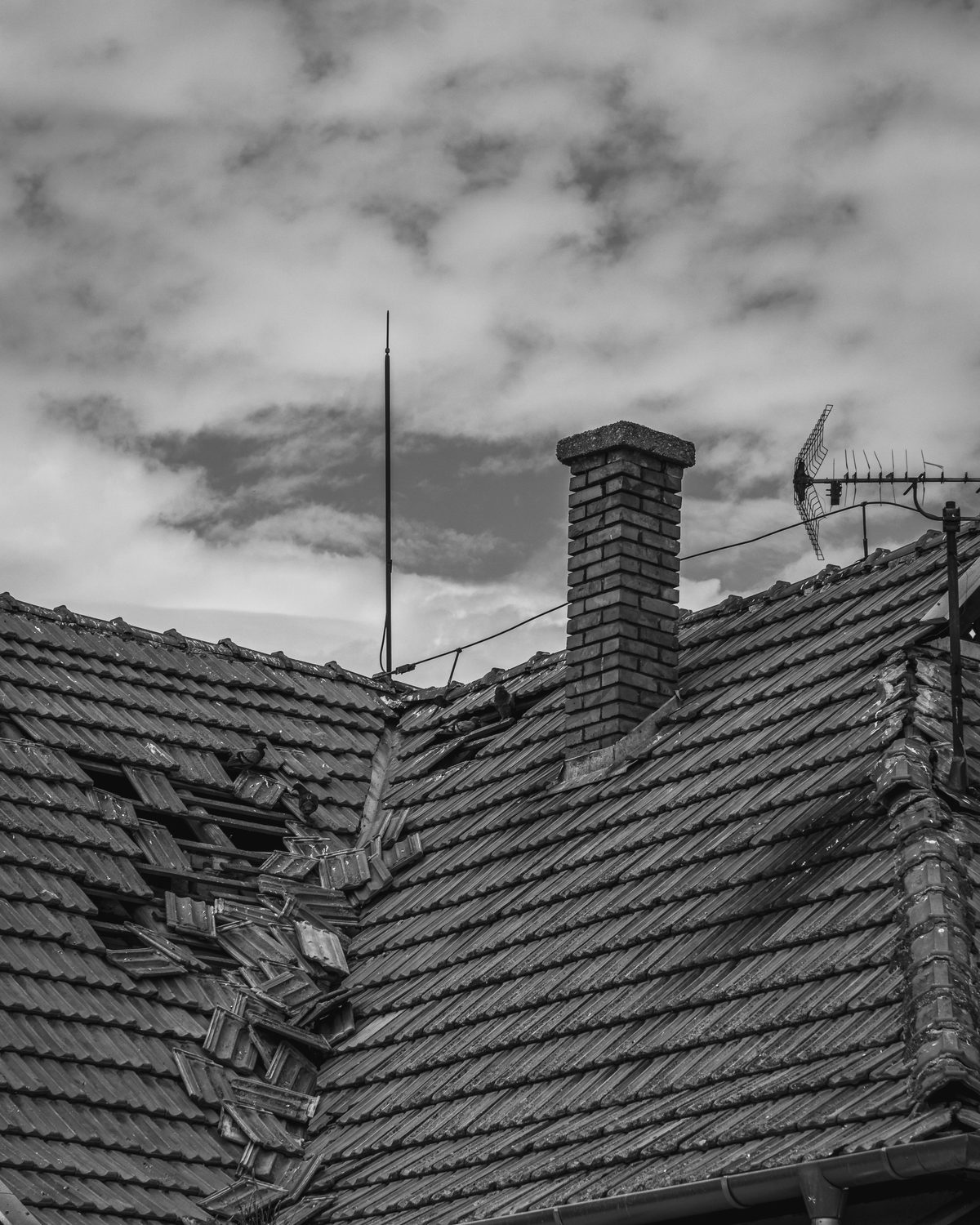
What the first visit is for
Stopping water, clearing what is blocked and securing what is loose. Not finishing the roof. Most roofing materials need a dry, clean surface to bond or weld to, and in the hours after a storm the roof is neither, so anything applied then is holding until conditions allow a proper repair.
We say that at the start rather than at the end, because a temporary repair presented as a permanent one is how owners end up paying for the same leak twice and being surprised the second time. Where the weather has cleared and the roof has dried enough, we will do the whole job on the first visit and there is no second one.
Why we will not give you an hour
Storms here do not arrive one building at a time. An afternoon of outflow wind and heavy rain tests every roof in the valley at once, and the calls come in together. Anyone who promises you a fixed arrival time in the middle of that is either not busy or not being straight with you.
What we will tell you is where you are in the queue, whether we expect to reach you before the next band of weather, and what to do in the meantime. That is more useful than a number, because it lets you protect the stock and the equipment underneath instead of waiting by the door.
The damage was usually there before the storm
Almost every emergency we attend started as something visible months earlier. A pipe boot that had gone hard and split at the base. A counterflashing that had crept away from a parapet. A drain that had been filling with grit since the last rain. The storm did not create those. It found them.
The second pattern is work by other trades. Somebody installed equipment, ran conduit or serviced a unit, and the roof around it was never made good. Those leaks show up with the first serious rain after the work, which here can be weeks or months later, by which time nobody connects the two.
Both of these are the argument for a scheduled look at the roof in the spring rather than a phone call in August. The repair is the same repair. Only the price and the water damage are different.
Common questions
A storm has just gone through. What should we check first?
Inside before outside, and from the floor rather than the roof. Walk the building and note where and when, because that record cannot be recreated later.
- Wet ceiling tiles, new stains, water near columns, walls and electrical panels
- Then look at the roof only if it is safe, since it may still be slippery
- Displaced metal with sharp edges, and standing water hiding an opening
- From a safe position: lifted coping or edge metal, anything that has moved
- Debris at the drains, and whether the roof is holding water
If it is holding water, say so when you call, because that changes the priority. Do not send facilities staff onto a low slope roof to make repairs in those conditions. The most common injury is somebody stepping into a ponded area, and the most common avoidable damage is a tarp dragged over intact membrane.
Why do so many buildings call on the same afternoon?
Because the storm tests every roof in the valley at once, and most of them have the same weaknesses.
- Months of sun harden the sealant and fatigue the laps
- Months of dry weather fill the drains with grit
- One afternoon of outflow wind and heavy rain finds all of it in the same hour
- Roofs that had been quiet for years open in several places at once
- Which is why we will not promise an arrival time during a storm
Emergency work is dispatched against everything already running. We will tell you what we know about timing, say plainly if we cannot reach you before the next band, and tell you how to protect what is underneath. The cheapest storm response is the work booked in spring, when the same repair costs a fraction.
Is a tarp any use on a low slope commercial roof?
Less than people expect, and on a windy afternoon it can make things worse. A tarp sheds water on a pitched roof. On a low slope roof there is nowhere for the water to go.
- It becomes a shallow pond held above the opening you are protecting
- Water then finds its way under the edges
- Blocks and pavers used to hold it down damage the membrane
- In outflow wind those weights become projectiles
- What works is a temporary repair rather than a cover
That means a patch bonded or taped over the opening in a material made for wet application, an edge sealed and terminated, or a peel and stick membrane over the damage. If water is pouring into occupied space and you have nothing else, a weighted cover buys a few hours. Tell us it is there.
The drains backed up and the roof is holding water. Is that urgent?
Yes, and it is more urgent than most leaks. Water is heavy, and a roof holding it is carrying a load the structure was not designed to take.
- A low area collects water, deflects under the weight, then collects more
- That is the mechanism behind most sudden flat roof failures
- On a large roof a blocked outlet puts great weight over one spot quickly
- Call it in as a drainage problem, not a leak, because the response differs
- The first job is opening the outlet, before anybody worries about the membrane
Clear what you safely can from ground level where the roof drains through scuppers, but do not send people onto a loaded roof in the rain. The preventive version costs almost nothing: clearing drains, strainers and scuppers before the season, and making sure something relieves the roof if the primary outlet blocks.
What should we photograph before anything gets cleaned up?
Everything, and more than feels necessary, because the evidence exists for a short window and then it is gone.
- On the roof: the damage, the area around it, anything lifted or moved
- Debris at the drains and standing water, before a crew covers or clears it
- If a temporary repair is going on, photograph what is underneath first
- Inside: ceiling, walls, floor and affected stock, before anybody mops
- Wide shots that place you in the building as well as the close ups
Write down when the water was first seen and what the weather was doing, and keep every invoice and report, including any inspection reports from before the storm. Policies generally treat storm damage and gradual deterioration differently, and that is a judgment for the insurer rather than for us.