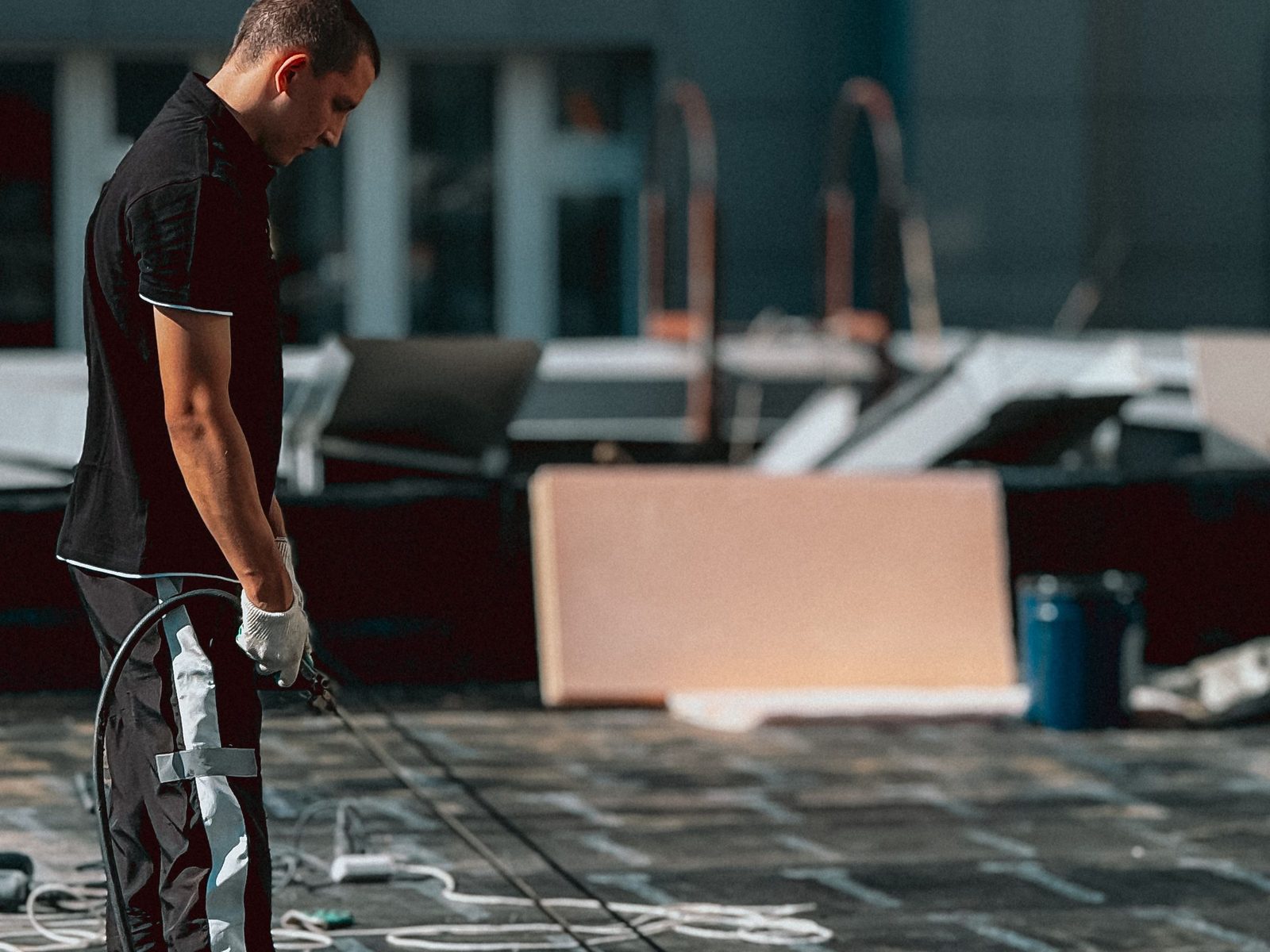
What a coating does on a roof in this valley
Two things, and both matter more here than they would somewhere mild. It restores a continuous surface over a membrane whose laps and details have started to fatigue, and it drops the temperature the roof runs at through the summer.
That second effect is the local argument. A dark roof surface in full sun here runs far hotter than the air around it, and that temperature drives the chemistry that turns membranes and sealants brittle, as well as the daily expansion and contraction that fatigues every joint on the roof. A reflective surface slows both. The cooling load underneath falls as well, though how much depends far more on the insulation in the assembly than on the color of the top of it.
What a coating does not do is add structure or deal with water that is already inside. It is a skin. A good skin on a healthy roof is real value, and it is the reason so many buildings here are white.
The roofs we turn down
We quote fewer coatings than we are asked for, and the reasons are nearly always the same three.
The insulation is wet. A survey shows saturation across a meaningful part of the roof, and sealing it in makes the eventual replacement worse and dearer. The membrane has gone. Where the surface cracks when it is lifted, or the sheet is shrinking and pulling flashings off the parapets, there is nothing sound to bond to. Or the roof does not drain. A field that holds water after every storm will find the weakest part of any coating system and start there.
In each case there is a better purchase, and it is often a partial replacement of the worst section rather than the whole roof. We would rather say so than take a job we know will not last.
What the result actually depends on
Preparation. Not the brand, not the price per square. A coating fails at the bond, and the bond fails where dust, chalk or a damp surface got between the coating and the roof. In a climate that lays fine grit onto every surface continuously, washing and rinsing a roof properly is the difference between a system that lasts and one that lifts at the edges in the first monsoon.
That is why our quotes carry a preparation line that is often bigger than the coating line. It is the part doing the work.
Common questions
What has to be repaired before a coating goes on?
Everything that is letting water in, and everything that is about to. A coating is a continuous surface over the roof you already have, so any defect left underneath stays there and keeps working.
- Fatigued seams, split pipe boots and counterflashings pulled away from parapets
- Curb flashings under rooftop units and loose drain clamping rings
- Any area where the insulation below has gone wet
- Wet insulation disqualifies a roof rather than simply adding to the bill
- Transitions reinforced with fabric at seams, corners, curbs and penetrations
Coating over wet boards seals water into the assembly while the deck and fasteners corrode out of sight. We cut those areas out and replace them, or we tell you the roof has gone past coating. A quote that does not mention detail work is a quote for painting the open field.
Which coating types are used here, and how do they differ?
Three families cover most commercial work and they behave differently enough that the choice matters.
- Acrylic is water based, reflects well and costs less, but dislikes standing water
- It also wears where foot traffic concentrates
- Silicone handles standing water and strong sunlight, which is why it turns up here
- It collects dirt, and recoating it later needs the right preparation
- Polyurethane is tougher underfoot, often as a top coat over a more flexible base
What decides the choice is the substrate and the roof's own weakness. The membrane already on the building has to be compatible, areas that hold water push toward silicone, and constant service access pushes toward abrasion resistance. Ask for the named product and the specified applied thickness in the quote.
Can a coating go over an area that holds water?
It depends on the system, and it is the question most worth asking before signing anything. Some coatings tolerate standing water and others degrade in it.
- A product that suits the open field may be wrong for a low corner
- Many warranties exclude ponding areas, leaving the likeliest failure uncovered
- Sometimes the cause is a drain full of grit, cleared in an hour
- Sometimes it is a real low spot, where tapered products restore fall locally
- Sometimes there is no fall at all, and a coating is treating a symptom
Where a long run has no fall, the honest recommendation is to plan a replacement with tapered insulation. We will tell you which of those three you have, with photographs of where the water sits, before quoting anything.
How long before a coated roof needs recoating?
Longer than owners expect on a well prepared roof and much shorter on a poorly prepared one. Anyone giving you a figure without seeing the building is guessing.
- Applied thickness, the product, and how well the surface was prepared
- How much foot traffic the roof takes, and how much sun
- The manufacturer states what the system is warranted for at a given thickness
- Keeping the surface clean, since dust cuts reflectivity and raises running temperature
- Walkway pads from the hatch to every unit, so trades stay off it
Work from the manufacturer figure rather than a rule of thumb. When recoating comes round, preparation matters as much as it did the first time, and some systems need a specific primer to bond to their own aged surface. Ask about that at the start rather than years later.
What happens when a coated roof finally does need replacing?
It comes off with everything else, and that is worth knowing before you buy the coating rather than after.
- The coating is bonded to the membrane, so both and usually the insulation go together
- It does not add a layer you can peel away
- It does not help the layer count either, because it restores rather than adds
- On a sound membrane it defers a large capital project and lowers running temperature
- On a failing roof it is money you will pay again in full and quite soon
The one thing a coating genuinely changes about the eventual replacement is the state of what is underneath. A roof kept sealed and dry gives you a tear off of membrane and sound insulation rather than saturated boards and a corroded deck.