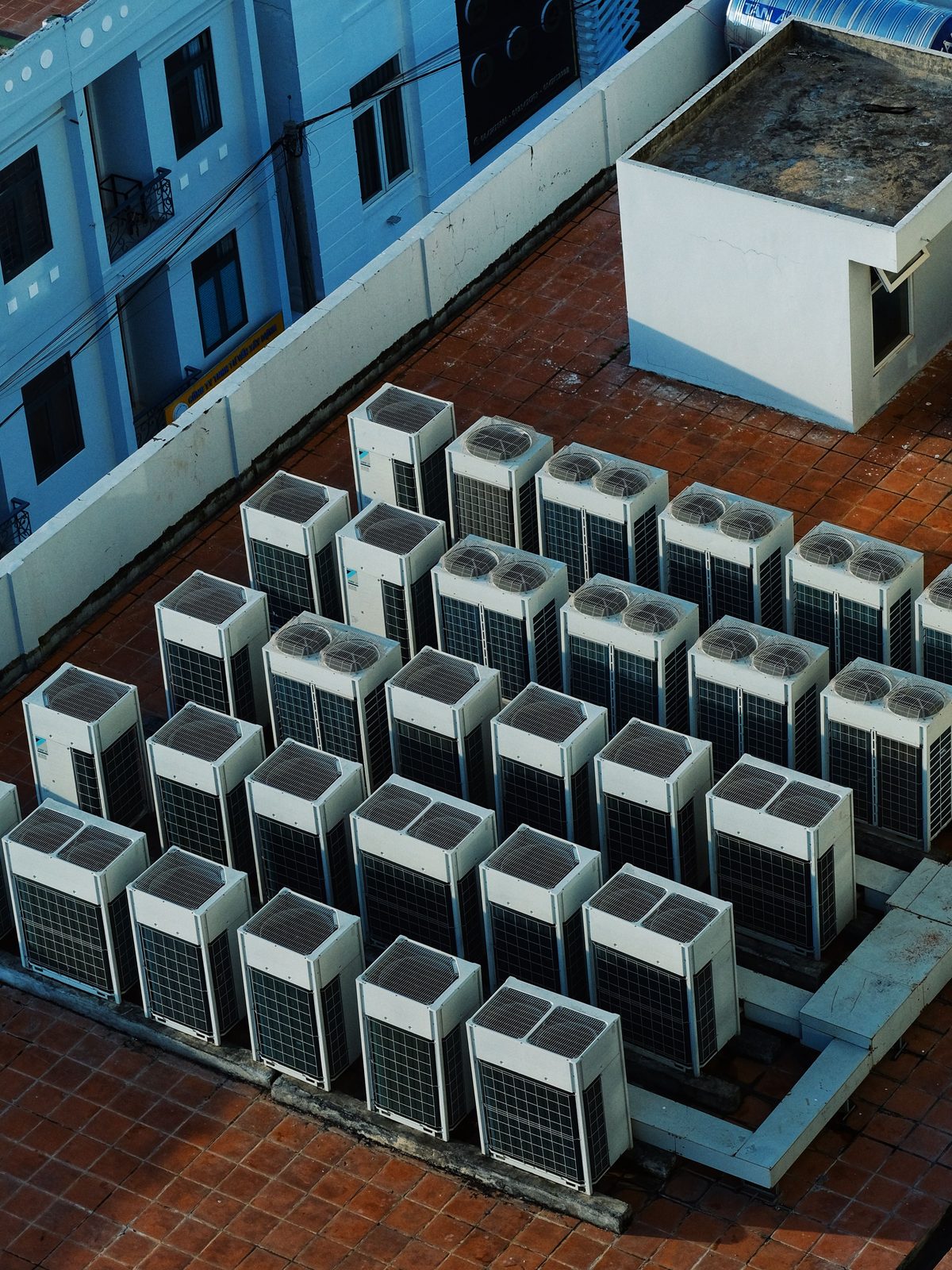
This is a checklist for what desert heat does to a commercial roof, and where to look for it. Run it in spring, before the monsoon walk, so that what you find can still be fixed in good conditions.
Heat damage does not leak while it is dry. It opens the paths, and the first storm uses them.
Before you go up
Go early in the day. A roof surface here runs well above the air temperature by mid morning, and a hot membrane marks under foot traffic.
Take a camera, last year’s photographs from the same standing positions, and water.
The details, where heat concentrates
| Look at | What a problem looks like |
|---|---|
| Sealant at terminations | Cracked, shrunken, pulled away from one side, or fallen out |
| Sealant around penetrations | A gap at the top of a collar, a bead that has split along its length |
| Seams and laps | An edge you can lift, a dirt line, a visible step |
| Pipe boots and collars | Hardened, split at the top, standing away from the pipe |
| Flashings at curbs | Corners that have slumped, fixings that have worked loose |
| Metal to membrane junctions | Movement at the joint, sealant failed where two materials meet |
The membrane and surfacing
| Look at | What a problem looks like |
|---|---|
| Membrane texture | Noticeably harder, darker or more brittle than nearby areas |
| Straight line splits | Short splits over a joint, a fastener line or a substrate edge |
| Blisters | Raised, soft underfoot, larger than in last year’s photograph |
| Coating condition | Chalking, thinning, worn through at high points |
| Granule or gravel loss | Bare patches, granules collecting at the outlets |
| Color change | Areas that have gone noticeably darker and therefore hotter |
| Shrinkage at upstands | The membrane pulling down and away from the wall |
Around the equipment
| Look at | What a problem looks like |
|---|---|
| Condensate discharge | Running onto the membrane, a permanently damp patch, staining |
| Unit bases and stands | Feet bearing directly on the membrane, pads moved or crushed |
| Service routes | Scuffs, impressions, worn surfacing where crews walk |
| Fixings and brackets | Loosened by vibration, sealant failed around the base |
| Panels and covers | Left open, propped, or no longer fastening |
| Cable trays and conduit | Resting on a hot membrane, fixings driven through the roof |
The traffic damage
| Look at | What a problem looks like |
|---|---|
| Walkway pads | Missing, lifted, or ending short of where people actually walk |
| The route people really take | Wear where the shortcut is, not where the pads are |
| Impressions in the membrane | Footprints, ladder feet, dropped tool marks |
| Areas near hatches and ladders | The highest traffic on any roof, and the most worn |
Inside the building
| Look at | What a problem looks like |
|---|---|
| Ceiling finishes | Stains from a leak that has since dried out and been forgotten |
| Insulation in the void | Compressed, displaced or stained material |
| Comfort complaints below the roof | Spaces that run hot, which can point at wet or failed insulation |
| Plant rooms | Evidence of a leak nobody reported during the last season |
What to do with it
- Fix the details first. Sealant, laps and collars carry most of the heat damage and most of the risk.
- Repair before you coat. A coating over an open seam hides it rather than ending it.
- Put walkway pads where people walk. Not where the drawing says they should.
- Photograph from the same positions every spring. Heat damage is gradual and only shows in comparison.
- Schedule the work for spring or autumn. Materials and crews both perform better outside midsummer.
Want the reasoning behind these checks? Read what the desert climate does to a roof and when a coating is the right answer.
Walked by Date Roof
Common questions
How hot does a roof surface actually get here?
Far hotter than the air temperature, and that gap is the whole point. A dark membrane under full sun sits well above the number on the forecast, and it does so for months rather than days, which is what separates a desert roof from a hot one.
- Surface temperature, not air temperature, drives the damage
- Dark surfaces run hotter than reflective ones by a wide margin
- The daily swing between day and night matters as much as the peak
- Months of it, not days, is what ages the material
- Reflective surfaces reduce the peak, which is the whole case for a coating
The useful way to think about it is cycles rather than peaks. Every day the roof expands and every night it contracts, and every detail on the roof has to absorb that movement. Sealants, laps and fasteners are where the movement concentrates, which is why they are where a desert roof fails first and fails repeatedly. This is also why two identical roofs in the same city can age at different rates. Orientation, shading and surface color all change the temperature the material actually experiences.
What does heat damage look like before it leaks?
Hardened membrane, cracked and shrunken sealant, laps that have opened at the edge, coating that has chalked or worn through, and splits that run straight rather than following damage. None of these leak on a dry day, and all of them leak in the first storm.
- Sealant cracked, shrunken or pulled out of its joint
- Membrane harder, darker or more brittle than its surroundings
- Laps lifted at the edge, often with a dirt line along them
- Coating chalky, thin or worn through at high points
- Shrinkage pulling the membrane away from a wall or a curb
This is the reason a pre monsoon walk matters so much here. The heat opens the paths in silence over a summer, and the first wind driven rain finds every one of them in an afternoon. Finding them in June costs a tube of sealant and an hour; finding them in August costs a ceiling. Every one of these signs is cheap to put right while it is still dry, and every one of them becomes a leak repair with interior damage attached once the first storm has found it.
Does a reflective coating actually help?
On the right roof, yes, and the mechanism is simple: a lower surface temperature means less movement, slower ageing and a cooler building. It is not a repair, though, and it will not save a membrane that has already failed underneath.
- Lower surface temperature means less daily expansion and contraction
- The benefit is to the whole roof, not just the coated area
- A coating needs a sound, dry, properly prepared substrate
- Chalking and wear mean it is working and will need renewing
- It also makes later inspection easier, because damage shows against a light surface
The test before coating is condition, not age. Wet insulation underneath rules it out whatever the surface looks like, and so does a membrane with open seams that have not been reworked first. A coating applied over a roof that needed repair buys a year and hides the evidence for the rest of them. Budget for renewal rather than treating a coating as permanent. A coating is a maintenance item with a service life of its own, and the roof underneath it still needs walking every year.
What about equipment running all summer?
Rooftop units work hardest here in exactly the months the roof is most vulnerable, and the interface between the two is where the damage shows up. Condensate, vibration, service traffic and fixings all concentrate around the units. The membrane is softest in exactly the weeks the service engineers are on the roof most often.
- Condensate discharging onto the membrane keeps a patch permanently damp
- Service traffic in summer walks a hot, soft membrane
- Vibration loosens fixings and opens curb details
- Panels left open or propped after a service call
- Equipment replaced in summer, with the old unit dragged across the membrane
Walking a hot membrane damages it in a way that walking the same roof in February does not, because the material is soft and takes an impression. Where units are serviced monthly through summer, walkway pads along the service route are usually cheaper than the repairs that follow their absence. Ask for a service log from whoever maintains the units. Comparing it with the roof findings usually explains several of them, and it tells you when somebody was up there and what they were carrying.
When is the best time to do roof work here?
Spring and autumn for anything planned, and early morning for anything urgent in summer. Several materials cannot be applied properly above a certain surface temperature, and a crew working at midday in July is working badly whatever their intentions. The quality of the finished work depends on the conditions it was installed in more than most trades admit.
- Coatings and adhesives have surface temperature limits
- A hot membrane marks and damages under foot traffic
- Crew safety limits the working day in midsummer
- Spring work also beats the pre monsoon rush for availability
- Autumn work also gets the roof ready before the following season's heat
Plan the year backwards from the monsoon. Inspections and minor repairs in spring, major work in autumn, and reserve summer for what cannot wait. That ordering gets better workmanship, better pricing and a roof that enters the storm season already in the condition you wanted it to be in. Where something genuinely cannot wait, agree an early start and an early finish rather than a full day, and expect the crew to stop when the surface temperature rules the work out.